

Palatal Expander
Palatal Expander
The palatal expander helps create more space in your child’s mouth by gently widening the upper jaw. Each time it’s adjusted, it applies light pressure to the upper molars to gradually guide the jaw into a better position. The photos below will walk you through when and how to make the turns at home.
Once the desired expansion is reached, the expander will remain in place for a few months to allow the bone to stabilize and prevent the jaw from shifting back. It’s a simple but important step in setting your child up for a healthy, well-aligned bite.

 STEP 1
In a well-lit area, tip the patient's head back.
 STEP 2
Place the key in the hole until it is firmly in place.
 STEP 3
Push the key toward the back of the mouth. You will notice the fender will rotate and the new hole will appear. The rotation stops when the key meets the back of the expander.
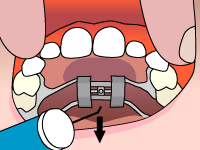
STEP 4
Press back and down toward the tongue to remove the key. The next hole for insertion of the key should now be visible.